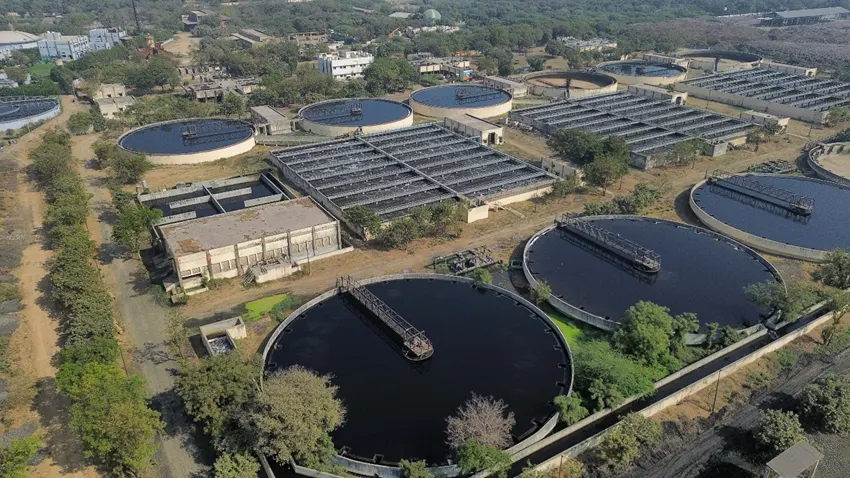
Enhance treatment performance without expanding infrastructure
Increasing hydraulic loads, evolving discharge standards, and aging treatment systems impact plant performance and operational stability.
At Awatech Solutions Pvt Ltd, we deliver STP upgrade services and sewage treatment plant upgrades that improve wastewater treatment through process optimization, biological upgrades, and aeration efficiency improvements.
We implement plant upgrades to increase treatment capacity, improve process consistency, and ensure compliance without extensive civil modifications. Each solution is configured based on plant limitations, influent characteristics, and required output standards to maintain consistent performance under variable load conditions.
Optimize plant performance with targeted upgrades.
How Our STP Upgrade Services Work
Upgrades are engineered to address hydraulic constraints, aging infrastructure, and fluctuating load conditions while maintaining stable biological performance, as described below:
Process Assessment and Gap Identification
We evaluate existing treatment performance, hydraulic constraints, and process limitations to identify gaps affecting output quality and system stability. It defines upgrade priorities based on load conditions, discharge requirements, and operational challenges.
Biological Process Enhancement
Treatment capacity improves through upgraded biological systems with advanced configurations, such as IFAS and optimized SBR cycles. These improve biomass retention, pollutant removal, and stabilize performance under fluctuating loads.
Aeration System Optimization
Oxygen transfer efficiency improves through fine bubble diffusion systems, high-efficiency blowers, and automated air control. It reduces energy consumption while maintaining consistent biological activity under varying conditions.
Clarification and Tertiary Upgrades
Separation efficiency is strengthened by high-rate clarifiers and compact tertiary filtration systems, reducing suspended solids and turbidity, and supporting consistent discharge quality under variable influent conditions.
Automation and Process Control
Plant operations are upgraded through SCADA-based monitoring, real-time data tracking, and automated control systems. This improves visibility, reduces manual intervention, and enables faster response to process variations.
Sludge Handling Improvements
Sludge volume and handling complexity are reduced through enhanced dewatering systems and process optimization—improving disposal efficiency and lowering overall operational load on the system.
Why Choose Awatech for STP Upgrade Services
Awatech brings proven execution capability in STP upgrades across varied plant conditions:

15+ years of experience

350+ projects delivered

100+ successful installations

380+ clients served
Each project is supported by capabilities that ensure controlled execution and long-term performance:
- Integrated digital visibility through monitoring systems and intuitive interfaces for simplified plant management
- Optimized resource utilization to reduce waste, improve productivity, and control operating costs
- Proven technologies aligned with global benchmarks for consistent and reliable system performance
- Strong project ownership supported by structured execution and end-to-end EPC capabilities
Industries We Serve
Our services support a wide range of facilities requiring performance improvement, capacity enhancement, and compliance:
Municipal Wastewater Treatment Plants
Residential and Commercial Complexes
Industrial Facilities
Hospitality and Institutional Campuses
Townships and Urban Infrastructure Projects
FAQ
1: When should STP upgrade services be used instead of replacing a plant?
An STP should be upgraded when existing infrastructure can handle higher loads, improve effluent quality, or meet new discharge standards without complete replacement.
2: Can STP upgrades handle variable load conditions?
Yes, STP upgrades improve system stability by optimizing biological processes and control systems, ensuring consistent performance under fluctuating hydraulic and organic loads.
3: How much does an STP cost?
The cost depends on plant capacity, technology used, site conditions, and discharge standards. Small systems start from a few lakhs, while large plants require higher investment.
4: How can STP upgrades increase treatment capacity?
Capacity improves through process optimization, biological upgrades such as IFAS, improved biomass retention, and aeration—allowing higher loads within the same footprint.